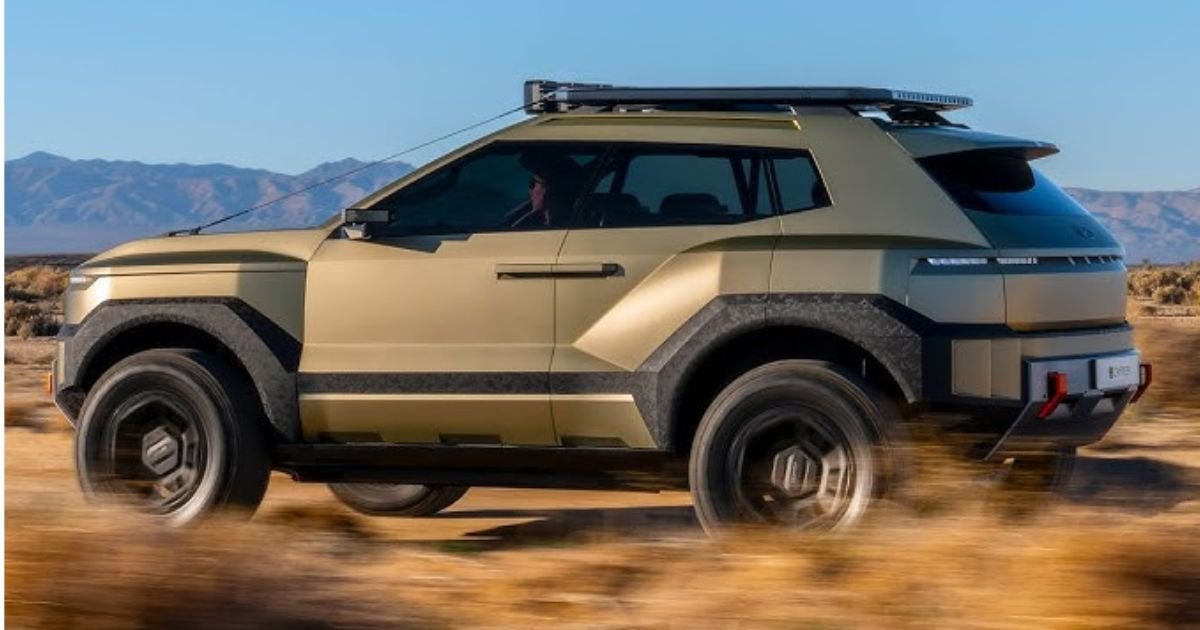
Envision gliding over the moon’s surface as your ride alters its form perfectly to rule the roughest terrains and the softest ones. That’s the promise that Hyundai makes with its Crater Concept, an adventurous electric off-roader that has been disclosed at CES 2026. This is not merely a vehicle; it is a transforming monster that mashes together nostalgic looks with the very latest technology. It takes off from sci-fi visions, and it can adapt to all types of surfaces, which means that your daily trips can be turned into escapades.
Shape-Shifting Innovation Takes Center Stage
At CES 2026, Hyundai revealed the magic at the core of the Crater Concept, the vehicle with its body panels that adapt accordingly to the environment. These pliable structures utilize smart materials that allow the vehicle to expand or shrink and in the process adjust the strength of the vehicle on unpaved paths. Drawn from the lunar surface rovers, it has a modular frame that can change its configuration in seconds through AI commands.
Powertrain That Packs A Punch
Underneath the membrane—or more accurately, the heavy-duty chassis—stuffs a dual-motor electric configuration, which puts out 450 horsepower. The configuration feeds on a 100 kWh battery that is good for more than 400 miles of eco mode driving range. The fast-charging tech zaps it to 80% in just 20 minutes. Hyundai has incorporated regenerative braking that is improved by terrain sensors for its electric vehicles, which means that the efficiency is maintained on the different types of surfaces.
Tech Features To Thrill Any Driver
The inside mixes the simplicity of a desert lifestyle with the sophistication of the digital world. A panoramic augmented reality windshield projects the navigation data on top of the real world which makes the off-road driving even more tech-savvy and less confusing. Voice-activated commands allow the driver to change suspension settings while the haptic feedback in the seats warns about the presence of obstacles.
Sustainability At Its Core
Hyundai puts pollution control at the forefront, covering 70% of the body with recycled plastics. The rooftop solar panels keep the battery topped up even when the vehicle is not in motion. Factory plans call for carbon-negative production by 2028. The latest Automotive News reports reveal how the Crater Concept is able to cut down the waste produced during its manufacturing by 40% as compared to the standard SUVs.
Key Specs At A Glance
| Feature | Details |
|---|---|
| Dimensions | 180″ L x 80″ W (expandable to 90″) |
| Top Speed | 140 mph |
| Acceleration | 0-60 mph in 4.2 seconds |
| Price Estimate | Starting at $65,000 (2027 launch) |
| Capacity | 5 passengers + cargo |
Why It Stands Out
Other vehicles like Tesla’s Cybertruck are all about the ability to do heavy work, whereas Crater has the feature of versatility as its signature. It is aimed at enthusiastic people who love to explore and are happy to go off the beaten path, but still want to be in places like Zaidpur’s rural roads where ruggedness of a normal car can’t do the unpaved road.
In a nutshell, the Hyundai Crater Concept is a dreamer confirmed its amazing vision by crossing the boundaries between innovation and practical solutions. While it is getting ready for the market, keep an eye on it as its impact is going to be a widespread one across the whole industry. (500 words total)